

Simple Health Metrics Worth Checking — and How isCalculator Makes It Easier
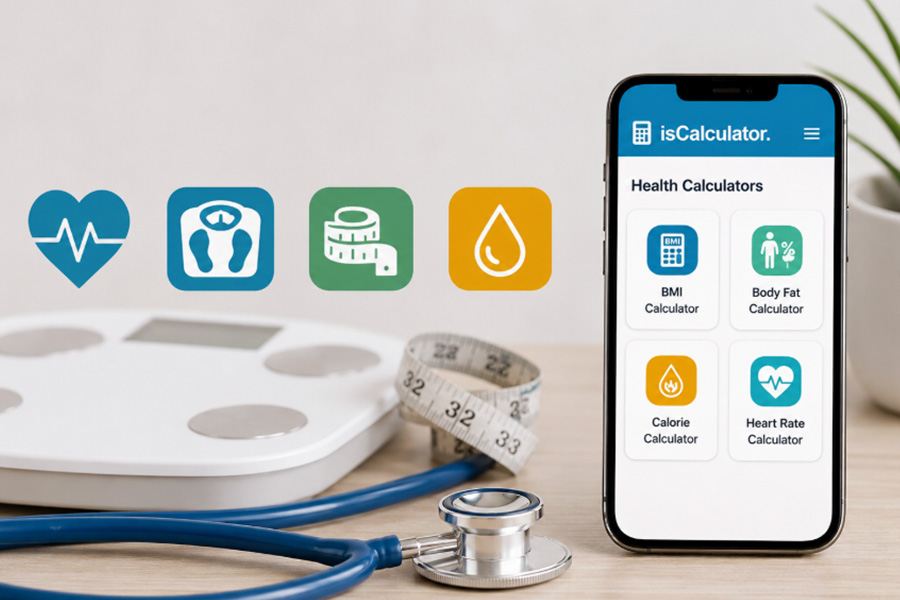
There’s a strange gap in how most of us handle our health. We’ll research a phone purchase for a week, comparing specs down to the last detail, yet go years without knowing basic numbers about our own bodies. Not because the numbers are hard to find — most take under a minute to check — but because nobody ever framed them as something worth checking.
This article covers a few of those numbers: what they mean, what they don’t mean, and how to check them without turning your life into a data project.
Weight is a trend, not a moment
The bathroom scale is the oldest health tracker there is, and it’s still one of the most useful — provided you read it the right way. Your weight on any given morning reflects water, salt, the size of last night’s dinner, and half a dozen other things that have nothing to do with body fat. That’s why a single reading means very little, and why people who weigh themselves daily and panic at every jump usually give up on the habit entirely.
The better approach is boring: weigh yourself at roughly the same time, under the same conditions, and pay attention to the weekly average rather than any individual day. A trend over a month is real information. A Tuesday morning spike is not.
BMI: useful, imperfect, and worth understanding
BMI gets criticized a lot, and some of the criticism is fair. Because it’s built from only height and weight, it can’t distinguish muscle from fat — a rugby player and a sedentary person can share the same BMI while being in completely different physical shape. It also says nothing about where fat sits on the body, which matters for health risk.
But the criticism sometimes swings too far. For the majority of people who aren’t heavily muscled athletes, BMI remains a reasonable first filter. If yours falls well outside the typical range, it’s a signal that deserves attention — ideally a conversation with a doctor, who can look at the fuller picture. Think of it the way you’d think of a warning light on a dashboard: not a diagnosis, but a reason to look closer.
Calorie needs are personal — and that’s the point
Ask ten people how many calories a person needs per day and you’ll probably hear “2,000” ten times. In reality, that figure is a labeling convention, not a personal target. Actual needs depend on age, sex, height, weight, and activity level, and the spread between individuals is enormous. A small, mostly sedentary woman and a tall, active man might differ by well over a thousand calories a day.
An estimate based on your own details gives you a far more honest starting point. Then treat it as exactly that — a starting point. Watch what happens over a few weeks. If your weight stays where you want it, the estimate is doing its job. If not, adjust. Your body is the final referee, not the formula.
One honest caveat belongs here: if counting calories starts to feel compulsive or stressful rather than informative, that’s a sign to ease off and, if needed, talk to a professional. These numbers exist to serve you, not the other way around.
Don’t ignore the tape measure
Waist circumference is one of the most underrated health metrics, mainly because it’s so low-tech. Fat carried around the abdomen is more strongly tied to health risks than fat carried elsewhere, so your waist measurement captures something BMI simply can’t see. A related rule of thumb — keeping your waist under half your height — is crude but surprisingly robust across different body types. Measuring once a month at the same spot is all it takes.
Where the calculators come in
Knowing which metrics matter is half the job. The other half is removing every excuse not to check them, and this is where a good set of free tools makes a real difference. The isCalculator health category gathers calculators for BMI, ideal weight ranges, daily calorie needs, and related metrics in one place, all usable directly in the browser with no account, download, or payment involved.
That convenience matters more than it sounds. Most people check these numbers on impulse — a passing thought while waiting for the kettle to boil — and any friction at that moment, a sign-up form or an app install, is enough to kill the impulse. Tools that work instantly, on a phone as easily as on a laptop, and that rely on standard verified formulas, fit the way people actually behave: check the number now, think about it later.




Leave a reply
You must be logged in to post a comment.


-
Is It Better To Wax Or Laser Hair Removal?
Among the different hair removal methods, laser hair removal and waxing have ...