
Wholesale 10-Pack Research Peptides from a US Warehouse
When a health-site thread asks whether a BPC-157 or TB-500 vial is the compound on the label, the useful answer is not a protocol. It is how the material was bought.
Research peptides are laboratory reagents, not medicines.
Labs that run the same assay twice buy case quantity, match lots, and ship domestic so the paperwork and the box agree.
The query that matches that job is wholesale 10-pack research peptides from a US warehouse.
What a 10-Pack Is
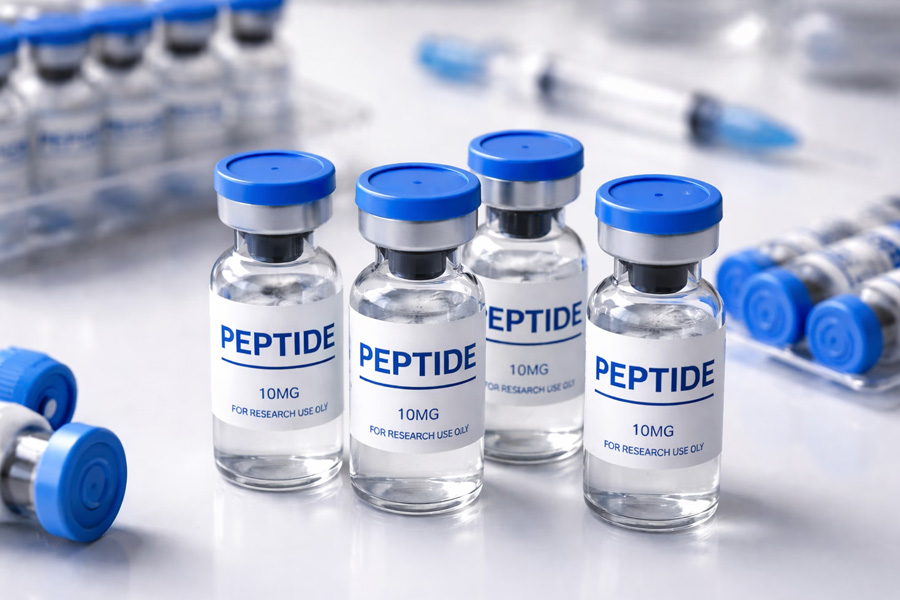
Ten lyophilized vials. Same compound. Same labeled strength. Same published lot when the lot exists.
Pack price and the per-vial number belong on one card. Hide either figure and you cannot compare vendors.
One vial is a sample. Ten vials is a run.
Purity Is Two Tests
HPLC, usually reverse-phase UV at 214 or 220 nm, measures how much of the UV-absorbing material sits under the main peak.
Mass spectrometry asks whether that peak is the named peptide.
A 2016 methods paper on peptides used in mass-spec assays still treats those as separate jobs.
A clean HPLC trace with no mass is not identity. A correct mass with no HPLC is not a purity number.
A Certificate of Analysis only counts when the lot on the PDF, the lot on the box, and the lot on the vial are the same string.
Costides publishes lot-pinned files when a lot is released and lists HPLC plus MS on the card.
Why the Warehouse Matters
Lyophilized powder travels better than a solution. Heat and a customs hold still ruin a lot.
Costides ships accepted orders from a US warehouse channel.
Typical door-to-door time is one to three days after release to pick, cold pack when the compound needs it.
Guest checkout works. An RUO attestation is required. No membership card.
What the Papers Cover
BPC-157
BPC-157 is CAS 137525-51-0, sequence GEPPPGKPADDAGLV, average mass about 1419.5 Da.
A 2025 orthopaedic systematic review found 35 preclinical studies and one small clinical report and did not claim the human data was enough.
A 2025 narrative review said the same: plenty of animal work, almost no rigorous human trials.
TB-500
TB-500 is two molecules under one name.
The fragment most catalogs sell is Ac-LKKTETQ, CAS 885340-08-9, about 889 Da.
Full thymosin beta-4 is 43 residues, CAS 77591-33-4.
If the COA carries the wrong CAS, you do not know which chain arrived.
That is identity. It is not a stack and it is not medical advice.
Before Checkout
- 10-pack with pack price and per-vial math visible, or a single vial behind a login.
- HPLC plus MS and a lot-pinned COA when published, or a bare “99 percent.”
- Named US warehouse and a 1–3 day domestic window, or an overseas label with no cold-pack note.
- Guest checkout plus RUO attestation, or a membership wall before price.
- Laboratory research language, or outcome promises.
Three fails and it is a listing, not a source.
Costides
Costides is built around that list.
See wholesale 10-pack research peptides from a US warehouse for pack math, lot files when released, and domestic fulfillment.
Match the lot on the box to the file.
BPC-157 identity is on the research monograph:
https://costides.us/us/research/bpc-157
COAs appear when that lot is published. Not every SKU has a live PDF every day.
“Research grade” is a claim until the chromatogram and the mass match the label.
Costides sells laboratory materials. It is not a clinic and it does not write reconstitution steps.
Disclaimer
This article is educational. It is not medical advice.
Compounds named here are for laboratory research use only. Not for human or veterinary use.
FAQ
Why ten vials?
A pack is a case. Same lot, cheaper handling per vial, enough material to repeat a measurement.
Does US shipping prove purity?
No. The warehouse covers transit. The COA covers the vial.
Is HPLC enough?
No. HPLC counts the peak. Mass spec names it.
Why do TB-500 pages conflict?
Fragment CAS 885340-08-9. Full thymosin beta-4 CAS 77591-33-4. Read the mass.
Will a RUO seller give personal reconstitution steps?
No. If they do, they have left the research-use line.
Lot on the vial and the PDF disagree?
Do not use that material in a recorded experiment. Ask for the matching file or send the pack back.




Leave a reply
You must be logged in to post a comment.


-
Is It Better To Wax Or Laser Hair Removal?
Among the different hair removal methods, laser hair removal and waxing have ...